
Snub Pulley
- Home
- Snub Pulley
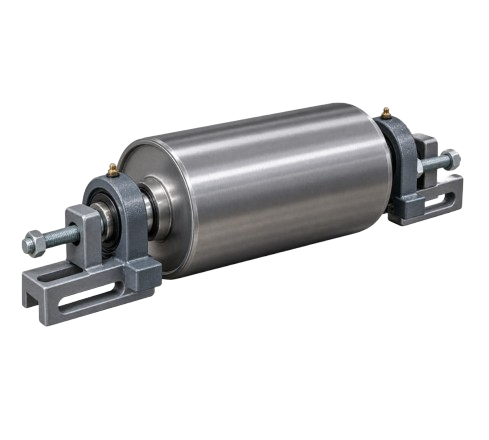
Snub Pulley
A snub pulley is a conveyor pulley installed close to a drive
pulley to increase the angle of belt wrap around the drive
pulley. By increasing belt contact with the drive pulley, a snub
pulley helps improve traction and power transmission while
reducing the possibility of belt slippage in demanding conveyor
applications.
What Is a Snub Pulley?
A snub pulley is a non-drive pulley positioned near the drive
pulley in a belt conveyor system. Its primary purpose is to
increase the amount of conveyor belt that remains in contact
with the drive pulley.
The additional belt wrap created by the snub pulley increases
the effective contact area between the belt and drive pulley.
This is particularly useful where high belt tensions, heavy
material loads, long conveyor lengths, or demanding operating
conditions require improved drive traction.
Snub pulleys are generally used as part of a complete conveyor
pulley arrangement rather than as an independent driving
component. Their position, diameter, and configuration are
selected according to the conveyor’s belt path, drive
requirements, belt tension, and operating conditions.
Function of a Snub Pulley
A snub pulley performs several important functions within a
conveyor system:
-
Increases Belt Wrap:
Increases the angle through which the belt remains in
contact with the drive pulley. -
Improves Drive Traction:
Greater belt contact can help the drive pulley transmit
power more effectively to the conveyor belt. -
Helps Reduce Belt Slippage:
Increased contact between the belt and drive pulley can
reduce the likelihood of slippage under suitable operating
conditions. -
Guides the Belt:
Helps maintain the required belt route around the drive
pulley assembly. -
Supports Conveyor Drive Arrangements:
Allows the conveyor system to achieve the required traction
without necessarily increasing the size of the drive
pulley.
How Does a Snub Pulley Work?
A conveyor belt normally passes around the drive pulley before
continuing along the return or carrying run. A snub pulley is
positioned close to the drive pulley so that it changes the
belt’s path and increases the belt’s contact angle around the
drive pulley.
As the belt travels around the snub pulley, the belt is brought
into contact with a larger portion of the drive pulley surface.
The increased wrap provides greater frictional contact between
the belt and drive pulley.
This additional contact can improve the ability of the drive
pulley to transmit torque to the belt and can help minimize
belt slippage, particularly in high-tension or heavy-duty
conveyor systems.
Importance of Belt Wrap
Belt wrap refers to the angle of contact between the conveyor
belt and the drive pulley. A greater wrap angle generally
provides more surface contact between the belt and pulley.
The snub pulley is used to increase this contact angle when the
conveyor design requires additional drive traction. The actual
pulley arrangement and wrap angle should be determined based on
the conveyor’s engineering requirements rather than using a
fixed configuration for every application.
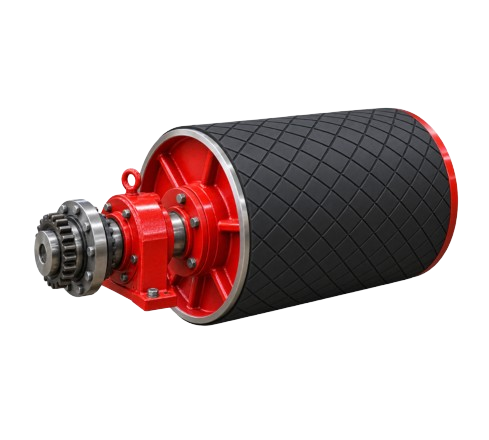
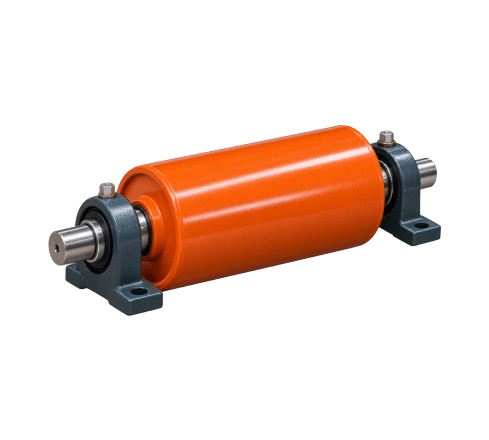
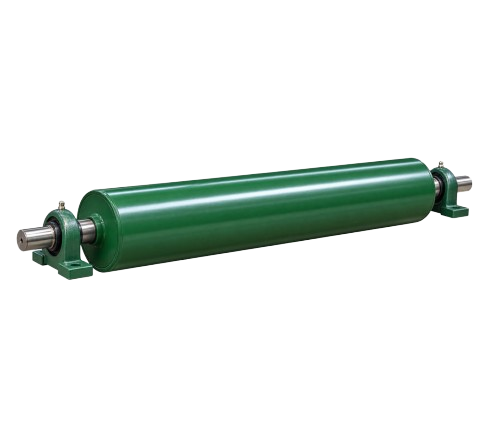
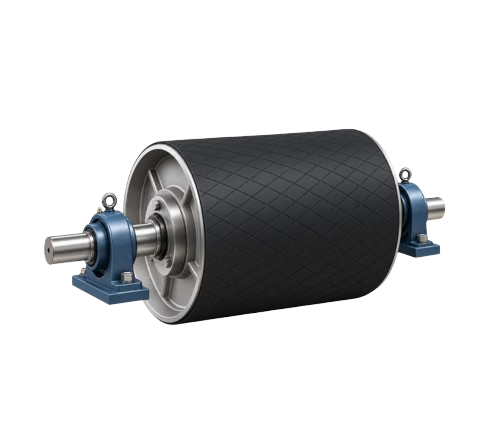
Snub Pulley Construction
A snub pulley is generally constructed as a cylindrical rotating
assembly designed to operate continuously under conveyor belt
tension. Major components may include:
-
Shell:
The cylindrical outer surface that contacts the conveyor
belt. -
Shaft:
The central structural member that supports the pulley
assembly and carries operating loads. -
End Discs:
Structural plates connecting the shell to the shaft and
distributing loads across the pulley. -
Hub:
Provides the connection between the shaft and pulley
assembly. -
Bearings:
Support the shaft and enable smooth pulley rotation. -
Lagging:
May be provided depending on the application and required
friction or surface protection.
Where Is a Snub Pulley Installed?
A snub pulley is normally installed close to the drive pulley.
Its exact position depends on the conveyor configuration and
the required belt routing.
By positioning the snub pulley appropriately, the conveyor
designer can increase belt wrap around the drive pulley while
maintaining the required belt path and clearance between
conveyor components.
Applications of Snub Pulleys
Snub pulleys are particularly useful in conveyor systems where
reliable drive traction is important. Common applications
include:
- Mining and mineral handling conveyors
- Long-distance belt conveyors
- Heavy-duty bulk material handling systems
- Coal handling conveyors
- Cement and construction material plants
- Stone and aggregate processing systems
- Power plant material handling systems
- High-tension conveyor applications
- High-capacity industrial conveyor systems
How to Select the Right Snub Pulley
Selecting a suitable snub pulley requires consideration of the
complete conveyor drive arrangement. Important factors include:
-
Conveyor Belt Width:
Determines the required pulley face width and overall
dimensions. -
Belt Tension:
The pulley and shaft assembly must be capable of handling
the operating belt tension. -
Drive Requirements:
The snub arrangement should provide the belt wrap required
for the drive system. -
Pulley Diameter:
Should be suitable for the belt construction and conveyor
configuration. -
Belt Speed:
Operating speed affects pulley rotational speed and
mechanical requirements. -
Wrap Angle:
The pulley arrangement should provide the required increase
in belt contact around the drive pulley. -
Operating Environment:
Dust, moisture, temperature, corrosion, and abrasive
materials should be considered. -
Maintenance Requirements:
Bearing accessibility, inspection requirements, and
serviceability should be considered during selection.
Benefits of a Properly Engineered Snub Pulley
Increased Belt Wrap
Increases the contact angle between the conveyor belt
and drive pulley.
Improved Drive Traction
Greater belt contact can support more effective torque
transmission from the drive pulley to the belt.
Reduced Slippage Risk
Additional belt wrap can help reduce belt slippage when
the conveyor is correctly designed and operated.
Efficient Conveyor Design
Provides an effective way to increase belt wrap without
relying solely on a larger drive pulley.
Snub Pulley Maintenance
Regular inspection and maintenance are important for maintaining
reliable snub pulley operation. The pulley assembly should be
inspected for shell wear, shaft condition, bearing performance,
alignment, lagging condition, and signs of structural damage.
Operators should also monitor unusual noise, excessive
vibration, bearing temperature, belt tracking, and abnormal
belt wear. Any material buildup around the pulley should be
addressed where it can affect belt movement or pulley rotation.
Proper alignment is particularly important because incorrect
positioning can affect belt tracking and increase unnecessary
stress on the conveyor belt and pulley components.
Need the Right Snub Pulley for Your Conveyor?
Share your conveyor belt width, belt tension, belt speed, drive
arrangement, and operating conditions with our team to discuss
a suitable snub pulley configuration.