
Tail Pulley
- Home
- Tail Pulley
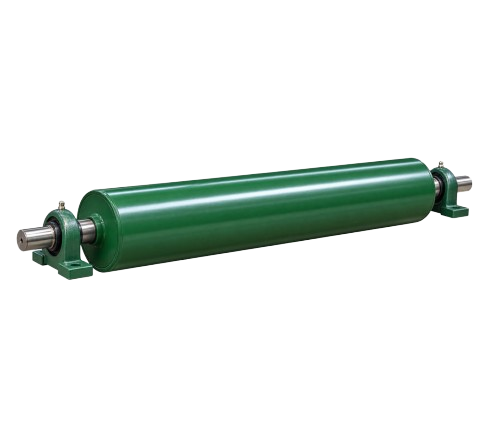
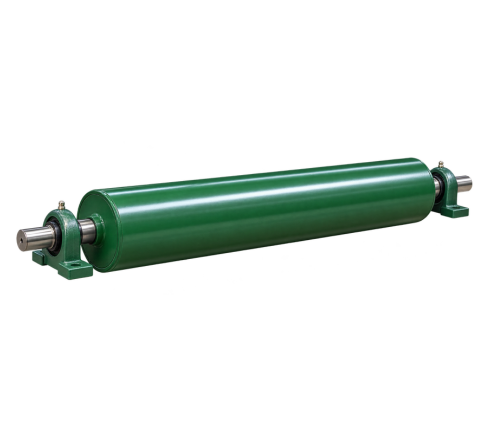
Tail Pulley
A tail pulley is a conveyor pulley generally positioned at the
opposite end of the conveyor from the head pulley. It guides the
conveyor belt from the return run back toward the carrying run
and provides a stable point for belt movement, alignment, and
tension management.
What Is a Tail Pulley?
The tail pulley is located at the tail or loading end of a belt
conveyor. It is one of the primary non-drive pulleys in many
conveyor configurations and plays an important role in
maintaining the correct path of the conveyor belt.
As the belt reaches the tail end of the conveyor, the tail
pulley changes the direction of the belt and guides it from the
return side back onto the carrying side. In many conveyor
systems, the tail pulley is also positioned near the material
loading point.
Depending on the conveyor design, the tail pulley may be
equipped with a plain or specially designed surface. Its
construction is selected according to belt width, belt tension,
material load, conveyor speed, operating environment, and
overall conveyor configuration.
Function of a Tail Pulley
The tail pulley performs several important functions within a
belt conveyor system:
-
Changes Belt Direction:
Guides the conveyor belt from the return run back toward the
carrying run. -
Supports Belt Movement:
Provides a rotating surface over which the belt can pass
smoothly. -
Maintains Belt Path:
Helps establish the correct belt route at the loading end
of the conveyor. -
Supports Loading Operations:
In many conveyor arrangements, the tail pulley is located
near the point where bulk material is loaded onto the belt. -
Works With Take-Up Systems:
Depending on the conveyor configuration, the tail pulley
can work with a take-up arrangement to maintain appropriate
belt tension.
How Does a Tail Pulley Work?
During conveyor operation, the belt travels along the carrying
side toward the head pulley and returns along the lower return
side. When the belt reaches the tail end, it passes around the
tail pulley and changes direction.
The rotating tail pulley allows the belt to transition smoothly
from the return run to the carrying run. The pulley therefore
helps maintain a continuous belt loop while supporting the
conveyor’s overall belt path.
Proper alignment of the tail pulley is important because
misalignment can contribute to belt tracking problems, uneven
belt wear, and increased stress on conveyor components.
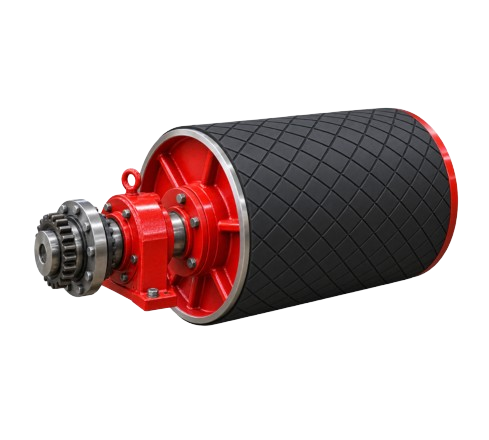
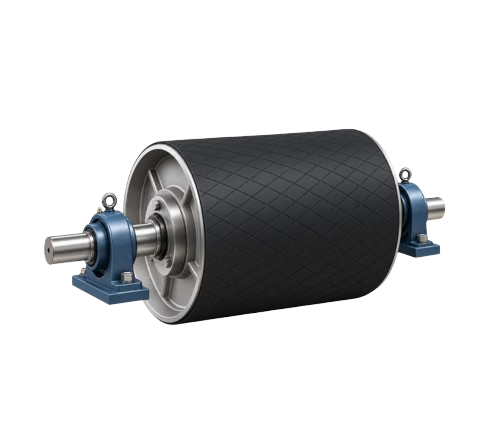
Tail Pulley Construction
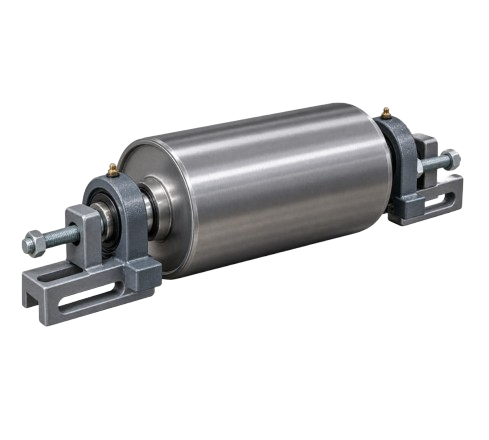
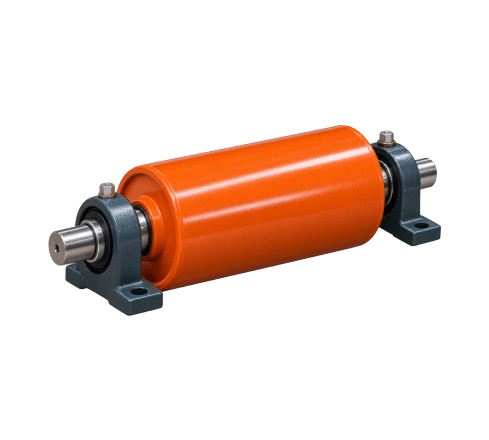
A tail pulley is generally manufactured as a cylindrical
rotating assembly designed to withstand the forces generated by
belt movement and conveyor operation. Its major components may
include:
-
Shell:
The cylindrical outer surface over which the conveyor belt
travels. -
Shaft:
The central structural member that supports the pulley
assembly and transfers operating loads. -
End Discs:
Structural plates connecting the shell and shaft while
helping distribute loads across the assembly. -
Hub:
Provides the connection between the shaft and pulley
assembly. -
Bearings:
Support the shaft and allow smooth rotation of the pulley. -
Lagging or Protective Surface:
May be provided depending on application requirements and
the level of belt traction or surface protection needed.
Tail Pulley and Conveyor Loading Points
Tail pulleys are often positioned close to the conveyor loading
area. This means the pulley and surrounding conveyor components
can be exposed to falling material, dust, abrasion, and impact.
For conveyors handling heavy or abrasive materials, the tail
pulley arrangement should therefore be selected with the
operating environment and loading conditions in mind. Suitable
conveyor design and regular inspection can help reduce wear and
maintain reliable operation.
Applications of Tail Pulleys
Tail pulleys are used across a wide range of belt conveyor and
bulk material handling systems, including:
- Mining and mineral handling conveyors
- Coal handling systems
- Cement and construction material plants
- Stone and aggregate processing systems
- Power plant material handling conveyors
- Steel and metal processing facilities
- Bulk material transfer systems
- Industrial production conveyor lines
How to Select the Right Tail Pulley
Selecting a suitable tail pulley requires consideration of the
conveyor’s operating conditions and mechanical requirements.
Important factors include:
-
Conveyor Belt Width:
Determines the required pulley face width and overall
dimensions. -
Belt Tension:
The pulley should be capable of handling the operating
tension of the conveyor belt. -
Material Characteristics:
Bulk density, particle size, abrasiveness, and material
behaviour should be considered, particularly when the
pulley is located near the loading point. -
Belt Speed:
Influences the rotational speed and operating requirements
of the pulley. -
Pulley Diameter:
Should be appropriate for the belt construction and conveyor
configuration. -
Loading Conditions:
Heavy loading and material impact near the tail end should
be considered during conveyor design. -
Operating Environment:
Dust, moisture, corrosion, temperature, and abrasive
materials may affect pulley selection and construction. -
Maintenance Requirements:
Bearing accessibility, inspection requirements, and
component serviceability should be considered.
Benefits of a Properly Engineered Tail Pulley
Smooth Belt Reversal
Provides a controlled transition of the belt from the
return run to the carrying run.
Stable Belt Path
Helps maintain the intended conveyor belt route and
supports consistent belt movement.
Reliable Operation
Properly engineered construction supports dependable
performance under continuous conveyor operation.
Suitable for Heavy-Duty Systems
Can be engineered for demanding applications involving
high loads, abrasive materials, and continuous service.
Tail Pulley Maintenance
Regular inspection and maintenance are important for reliable
tail pulley performance. The pulley should be checked for
alignment, shell condition, bearing performance, shaft wear,
fastener condition, and signs of structural damage.
Operators should also monitor belt tracking, unusual noise,
excessive vibration, bearing temperature, and uneven belt wear.
Material accumulation around the tail pulley should be addressed
where necessary to prevent interference with belt movement.
Timely inspection and servicing can help identify developing
problems before they result in belt damage, component failure,
or unplanned conveyor downtime.
Need the Right Tail Pulley for Your Conveyor?
Share your conveyor belt width, belt speed, material
characteristics, belt tension, and operating conditions with
our team to discuss a suitable tail pulley configuration.