
Drum Pulley
- Home
- Drum Pulley
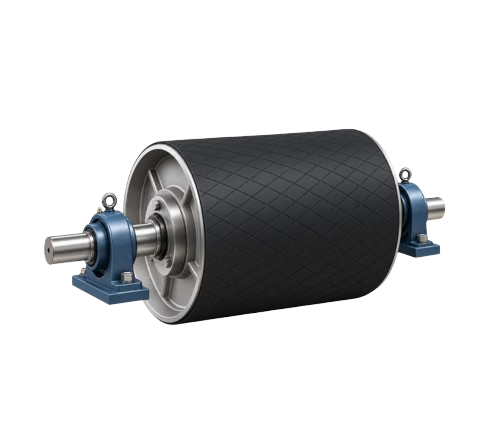
Drum Pulley
A drum pulley is a cylindrical conveyor component designed to
drive, redirect, or support the conveyor belt. It is widely used
in bulk material handling systems where reliable belt movement,
controlled tension, and continuous operation are essential.
What Is a Drum Pulley?
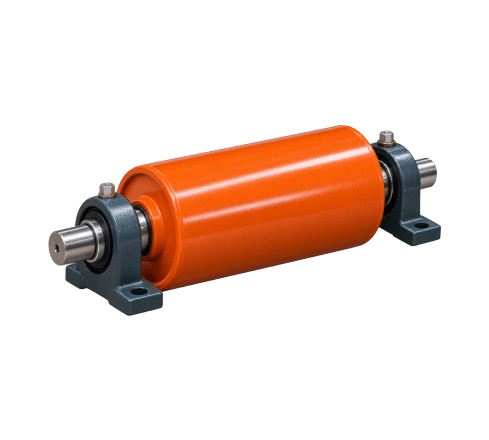
A drum pulley is a cylindrical rotating component installed
within a belt conveyor system. It consists primarily of a
cylindrical shell mounted on a shaft and supported by
bearings. Depending on its location and configuration, a
drum pulley can perform different functions within the
conveyor.
Drum pulleys are commonly used as drive, head, tail, bend,
or other conveyor pulleys depending on the system design.
Their construction can be engineered according to belt
width, conveyor capacity, belt speed, material load,
operating environment, and required service life.
How Does a Drum Pulley Work?
In a conveyor system, the drum pulley rotates around its
shaft while the conveyor belt passes over its cylindrical
surface. When the pulley is connected to a motor and
gearbox as a drive pulley, torque is transferred from the
drive assembly to the pulley.
The rotating pulley creates frictional contact with the
conveyor belt, allowing the belt to move continuously and
transport material along the conveyor route.
Depending on its position, a drum pulley may also redirect
the belt, maintain the required belt path, or work with
other pulleys to achieve the required belt tension and
wrap.
Drum Pulley Construction
A drum pulley is engineered as a complete rotating assembly.
The major components generally include:
-
Shell:
The cylindrical outer body that comes into direct
contact with the conveyor belt. -
Shaft:
The central structural member that supports the pulley
and transfers torque where required. -
End Discs:
Reinforced plates connecting the shell to the shaft
assembly and helping distribute operating loads. -
Hub:
Provides the connection between the pulley shaft and
rotating assembly. -
Bearings:
Support the rotating shaft and allow smooth pulley
rotation. -
Lagging:
An optional friction surface applied to the pulley shell
to improve belt grip and reduce belt slippage.
Types of Drum Pulley Configurations
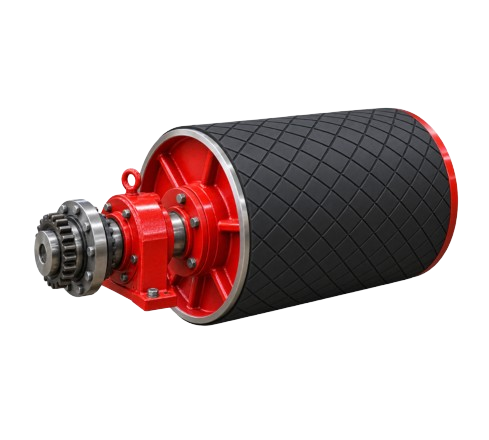
Drive Drum Pulley
Used to transmit power from the drive unit to the
conveyor belt and provide the primary belt-driving
force.
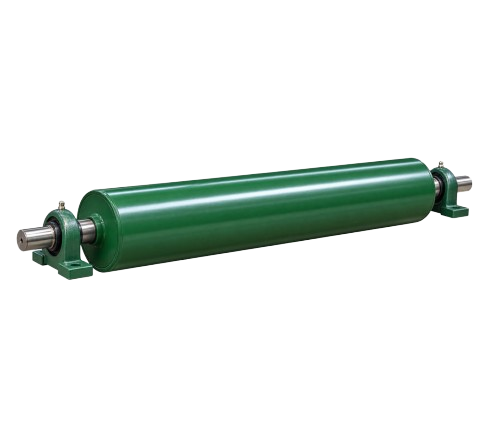
Non-Drive Drum Pulley
Used primarily to guide, redirect, or support the
belt without directly transmitting drive power.
Lagged Drum Pulley
Features a friction-enhancing lagging surface to
improve traction between the pulley and conveyor
belt.
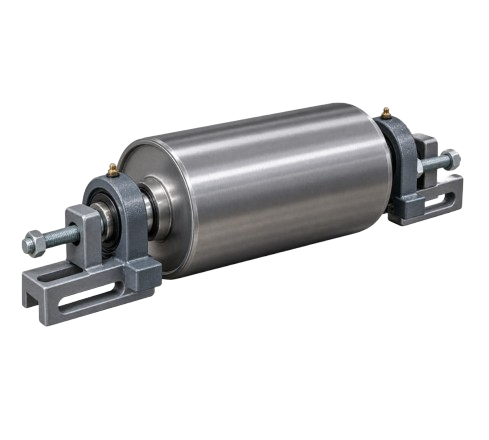
Plain Drum Pulley
Uses a bare cylindrical shell and can be suitable
for applications where additional belt traction is
not required.
Applications of Drum Pulleys
Drum pulleys are used across a wide range of conveyor and
bulk material handling applications, including:
- Mining and mineral handling conveyors
- Coal handling systems
- Cement and construction material plants
- Stone and aggregate handling systems
- Power plant material handling
- Steel and metal processing facilities
- Bulk material storage and transfer systems
- Industrial production conveyor lines
How to Select the Right Drum Pulley
Selecting the appropriate drum pulley requires consideration
of the conveyor’s operating and loading conditions. Important
factors include:
- Belt Width: Determines the required pulley face width and overall dimensions.
- Belt Speed: Influences pulley rotational speed and dynamic operating requirements.
- Material Load: Helps determine the required structural strength and load capacity.
- Conveyor Tension: Higher belt tensions require appropriately engineered pulley assemblies.
- Pulley Diameter: Must be suitable for the belt construction and conveyor configuration.
- Lagging Requirement: May be required where additional belt traction is necessary.
- Operating Environment: Dust, moisture, temperature, corrosion, and contamination should be considered.
- Duty Cycle: Continuous and heavy-duty applications may require more robust construction.
Benefits of a Properly Engineered Drum Pulley
Reliable Belt Movement
Provides controlled belt movement and supports
continuous conveyor operation.
Improved Drive Traction
Suitable lagging and pulley configuration can
improve frictional contact between the pulley and
belt.
Heavy-Duty Performance
Properly engineered construction can withstand the
demanding loads associated with bulk material
handling.
Long Service Life
Appropriate material selection, fabrication, and
maintenance can contribute to dependable service
performance.
Drum Pulley Maintenance
Regular inspection and maintenance are important for
maintaining reliable pulley performance. Maintenance
activities may include checking the pulley shell, shaft,
bearings, lagging, alignment, fasteners, and surrounding
conveyor components.
Particular attention should be given to unusual vibration,
abnormal noise, belt slippage, damaged lagging, bearing
temperature, and signs of shell or shaft damage. Early
identification of these conditions can help prevent
unexpected conveyor downtime.
Need the Right Drum Pulley for Your Conveyor?
Share your conveyor belt width, belt speed, material
characteristics, conveyor capacity, and operating
conditions with our team to discuss a suitable drum pulley
configuration.