
Bend Pulley
- Home
- Bend Pulley
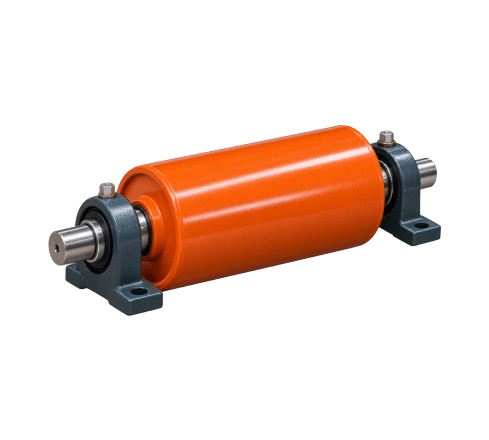
Bend Pulley
A bend pulley is a conveyor pulley used to change the direction
of the conveyor belt within a belt conveyor system. It is
commonly installed where the belt path requires a change in
direction and is designed to guide the belt smoothly while
handling the operating tension and loads of the conveyor.
What Is a Bend Pulley?
A bend pulley is a cylindrical pulley installed at a point where
the conveyor belt needs to change direction. Unlike a primary
drive pulley, its main purpose is generally to redirect the belt
and maintain the required conveyor belt path.
Bend pulleys are commonly used in conveyor systems that include
multiple pulleys, take-up arrangements, or changes in belt
routing. They allow the conveyor layout to be configured
efficiently while maintaining controlled belt movement.
Depending on the conveyor design, a bend pulley may be located
near a take-up system or another pulley arrangement. Its
dimensions and construction are selected according to belt
width, belt tension, pulley speed, belt configuration, and
operating environment.
Function of a Bend Pulley
A bend pulley performs several important functions within a
conveyor system:
-
Changes Belt Direction:
Redirects the conveyor belt to follow the required conveyor
route. -
Guides the Belt:
Provides a controlled surface around which the belt can
travel smoothly. -
Supports Conveyor Layout:
Allows conveyor designers to accommodate more complex belt
routing and pulley arrangements. -
Works With Take-Up Arrangements:
Can be incorporated into take-up systems where additional
belt routing is required. -
Maintains Belt Continuity:
Helps the conveyor belt complete its continuous loop while
maintaining the intended belt path.
How Does a Bend Pulley Work?
As the conveyor belt approaches a bend pulley, it passes around
the pulley surface and changes direction according to the
conveyor layout. The pulley rotates as the belt moves, allowing
the belt to change direction with controlled friction and
resistance.
The bend pulley does not normally provide the primary driving
force for the conveyor. Instead, it works with the drive,
return, and take-up components to maintain the required belt
routing.
Proper positioning and alignment are important because the bend
pulley must maintain the correct belt path without creating
unnecessary belt stress, tracking problems, or uneven component
wear.
Bend Pulley Construction
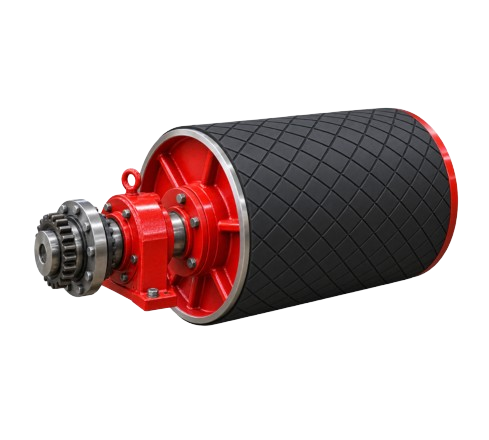
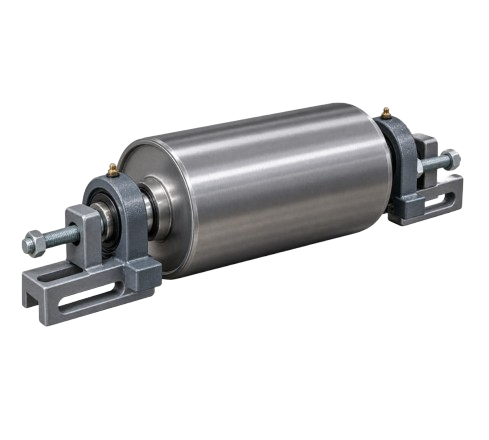
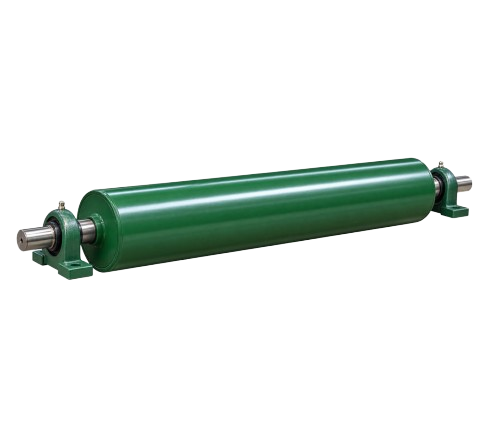
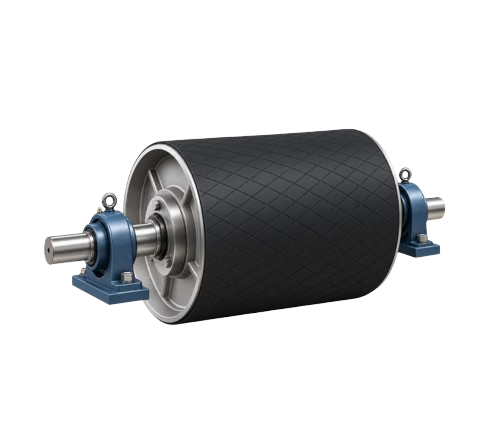
A bend pulley is generally manufactured as a robust rotating
assembly designed to withstand belt tension and continuous
operating loads. Its major components may include:
-
Shell:
The cylindrical outer surface that contacts and guides the
conveyor belt. -
Shaft:
The central structural member that supports the pulley and
carries the operating loads. -
End Discs:
Reinforced plates that connect the shell to the shaft and
distribute loads through the pulley assembly. -
Hub:
Provides the connection between the shaft and the rotating
pulley structure. -
Bearings:
Support the shaft and allow smooth pulley rotation. -
Lagging:
May be applied where additional friction, belt grip, or
surface protection is required by the conveyor design.
Applications of Bend Pulleys
Bend pulleys are used in various conveyor configurations where
controlled belt direction changes are required, including:
- Long-distance belt conveyor systems
- Heavy-duty bulk material handling conveyors
- Mining and mineral processing conveyors
- Coal handling systems
- Cement and construction material handling plants
- Stone and aggregate processing systems
- Power plant conveyor systems
- Conveyors with take-up arrangements
- Multi-pulley conveyor configurations
Bend Pulley in Take-Up Systems
Bend pulleys are frequently associated with conveyor take-up
arrangements where the belt needs to be routed through a
particular configuration to maintain the required belt tension.
In such systems, the bend pulley helps redirect the belt around
the take-up arrangement. The exact number and arrangement of
pulleys depend on the conveyor design, take-up type, belt
tension, available space, and required belt travel.
Correct pulley positioning is important to ensure smooth belt
movement and to avoid excessive bending, friction, or
misalignment.
How to Select the Right Bend Pulley
Selecting a bend pulley requires consideration of the conveyor
configuration and operating conditions. Important factors
include:
-
Conveyor Belt Width:
Determines the required pulley face width and overall
dimensions. -
Belt Tension:
The pulley must be capable of safely handling the operating
belt tension. -
Pulley Diameter:
Should be appropriate for the belt construction and required
belt bending conditions. -
Belt Speed:
Influences the rotational speed and dynamic operating
requirements of the pulley. -
Conveyor Configuration:
The pulley arrangement should match the required belt path,
take-up system, and available installation space. -
Wrap Angle:
The belt’s contact angle around the pulley should be
considered as part of the overall conveyor design. -
Operating Environment:
Dust, moisture, temperature, corrosion, and abrasive
materials may influence pulley construction and maintenance. -
Maintenance Requirements:
Bearing accessibility, inspection requirements, and
serviceability should be considered.
Benefits of a Properly Engineered Bend Pulley
Controlled Belt Direction
Provides a smooth and controlled change in the conveyor
belt’s direction.
Flexible Conveyor Design
Allows conveyor systems to accommodate more complex belt
routing and take-up arrangements.
Stable Belt Movement
Helps maintain a consistent belt path during continuous
conveyor operation.
Heavy-Duty Reliability
Properly engineered construction can support demanding
conveyor applications and operating conditions.
Bend Pulley Maintenance
Regular inspection is important to maintain reliable bend pulley
performance. The pulley assembly should be checked for
alignment, shell wear, shaft condition, bearing performance,
fastener condition, and signs of structural damage.
Operators should also monitor unusual noise, excessive
vibration, bearing temperature, belt tracking, and uneven belt
wear. Any material accumulation around the pulley should be
addressed where it can interfere with belt movement or pulley
rotation.
Proper inspection and timely maintenance can help reduce
unexpected component failures and support continuous conveyor
availability.
Need the Right Bend Pulley for Your Conveyor?
Share your conveyor belt width, belt tension, belt speed,
pulley arrangement, and operating conditions with our team to
discuss a suitable bend pulley configuration.