
New Product Single Template
- Home
- New Product Single Template
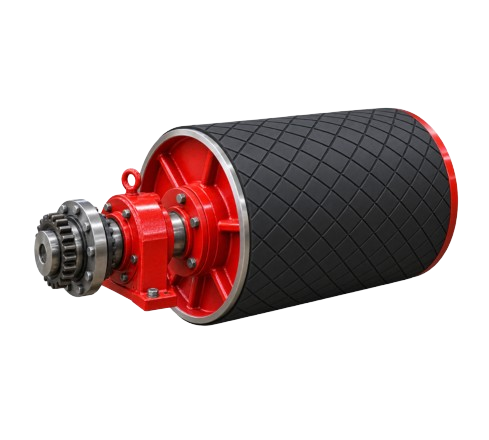
Take-Up Pulley
A take-up pulley is a conveyor pulley used as part of a belt
tensioning arrangement to maintain the appropriate tension in
the conveyor belt. It helps compensate for belt stretch,
maintain effective belt contact with drive components, and
support reliable conveyor operation.
What Is a Take-Up Pulley?
A take-up pulley is installed within a conveyor’s take-up
arrangement and is used to maintain the required belt tension.
Conveyor belts can experience changes in length during
operation because of elastic stretch, permanent elongation,
temperature variations, load changes, and other operating
conditions.
The take-up arrangement allows the pulley position to be
adjusted so that the conveyor belt remains sufficiently
tensioned throughout its operating range. This helps maintain
effective traction at the drive pulley and supports stable belt
tracking.
Take-up pulleys are commonly incorporated into gravity,
screw-type, or other engineered take-up arrangements depending
on conveyor length, belt tension, available installation space,
and system requirements.
Function of a Take-Up Pulley
The take-up pulley performs several important functions within a
belt conveyor system:
-
Maintains Belt Tension:
Helps maintain the required tension in the conveyor belt
during operation. -
Compensates for Belt Stretch:
Allows the take-up system to accommodate changes in belt
length caused by elastic and permanent belt elongation. -
Supports Belt Tracking:
Appropriate belt tension helps the conveyor belt maintain
stable movement along its intended path. -
Supports Drive Traction:
Proper belt tension helps maintain effective contact between
the belt and drive pulley. -
Maintains Conveyor Performance:
Helps the conveyor operate reliably as belt length and
operating conditions change.
How Does a Take-Up Pulley Work?
The take-up pulley forms part of a movable or adjustable
conveyor belt tensioning arrangement. When the belt becomes
longer due to stretch or operating conditions change, the
take-up arrangement allows the pulley position to be adjusted.
Moving the take-up pulley changes the effective length of the
conveyor belt path and restores the required belt tension.
This keeps the belt sufficiently tight for stable operation and
effective power transmission at the drive pulley.
The exact movement and adjustment method depends on the type of
take-up system used. Larger conveyors may use engineered
take-up arrangements designed to accommodate significant belt
movement and tension requirements.
Types of Take-Up Arrangements
Gravity Take-Up
Uses a weighted arrangement to apply a controlled
tensioning force to the conveyor belt. It is commonly
considered for longer conveyors where automatic
compensation for belt stretch is required.
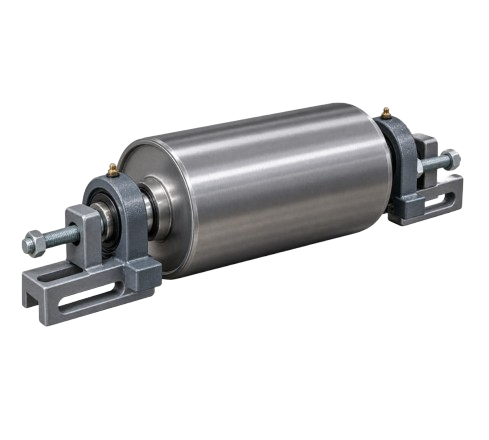
Screw Take-Up
Uses threaded adjustment mechanisms to move the pulley
and manually establish the required belt tension. It
can be suitable for shorter conveyors and applications
where regular manual adjustment is practical.
Automatic Take-Up
Uses an engineered tensioning mechanism to maintain
appropriate belt tension as operating conditions and
belt length change.
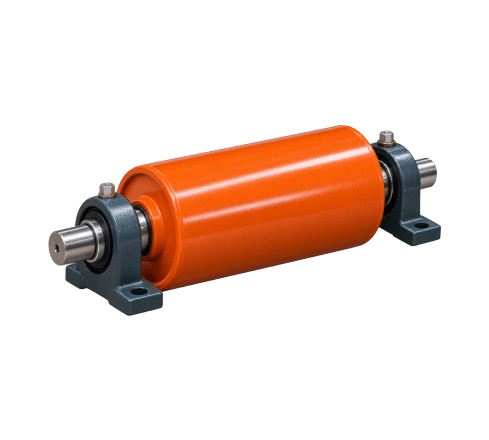
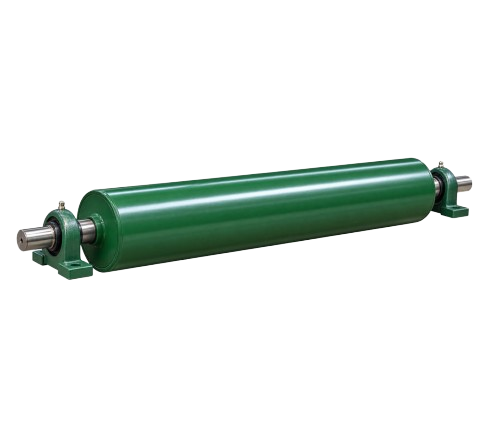
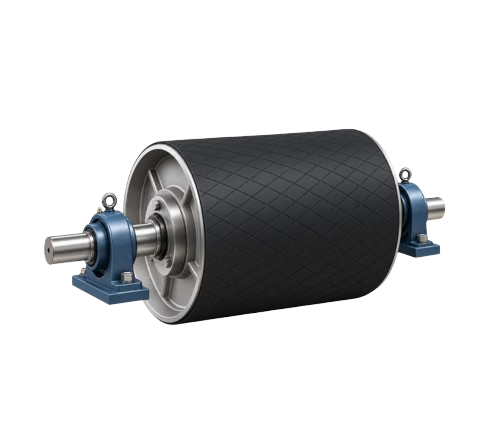
Take-Up Pulley Construction
A take-up pulley is generally manufactured as a robust
cylindrical rotating assembly capable of handling the belt
tension associated with the conveyor. Its major components may
include:
-
Shell:
The cylindrical outer surface over which the conveyor belt
travels. -
Shaft:
The central structural member supporting the pulley and
carrying operating loads. -
End Discs:
Reinforced structural plates connecting the shell to the
shaft assembly. -
Hub:
Provides the connection between the shaft and pulley
assembly. -
Bearings:
Support the shaft and allow smooth pulley rotation. -
Lagging:
May be incorporated where the application requires
additional friction or surface protection.
Importance of Proper Belt Tension
Correct belt tension is essential for reliable conveyor
operation. Insufficient tension can contribute to belt
slippage, unstable tracking, and inadequate drive traction.
Excessive tension, on the other hand, can increase loads on the
belt, pulleys, bearings, shafts, and other conveyor components.
A properly designed take-up system helps maintain the required
operating tension within the conveyor’s design limits while
accommodating normal belt length changes during service.
Applications of Take-Up Pulleys
Take-up pulleys are used in a wide range of conveyor systems,
particularly where controlled belt tension is important.
Typical applications include:
- Long-distance belt conveyors
- Mining and mineral handling systems
- Coal handling conveyors
- Cement and construction material plants
- Stone and aggregate processing systems
- Power plant material handling systems
- Steel and metal processing conveyors
- Bulk material transfer systems
- Heavy-duty industrial conveyor systems
How to Select the Right Take-Up Pulley
Selecting the appropriate take-up pulley and tensioning
arrangement requires consideration of the complete conveyor
system. Important factors include:
-
Conveyor Belt Width:
Determines the required pulley face width and overall
dimensions. -
Belt Tension:
The pulley and shaft must be capable of handling the
required operating and take-up forces. -
Conveyor Length:
Longer conveyors generally require greater consideration of
belt stretch and take-up travel. -
Belt Construction:
Belt material and construction influence allowable tension,
stretch, and pulley requirements. -
Take-Up Travel:
The available pulley movement should be sufficient to
accommodate expected belt length changes. -
Take-Up Type:
Gravity, screw, or other arrangements should be selected
according to conveyor design and operating requirements. -
Belt Speed:
Operating speed influences pulley rotational speed and
dynamic operating conditions. -
Operating Environment:
Dust, moisture, temperature, corrosion, and abrasive
materials should be considered. -
Maintenance Requirements:
Bearing accessibility, adjustment requirements, inspection,
and serviceability should be considered.
Benefits of a Properly Engineered Take-Up Pulley
Consistent Belt Tension
Helps maintain the required conveyor belt tension as
belt length changes during operation.
Improved Drive Performance
Appropriate belt tension supports effective contact
between the belt and drive pulley.
Better Belt Tracking
Proper tension contributes to stable belt movement and
can help minimize tracking problems.
Reduced Unplanned Downtime
A correctly designed take-up arrangement can help
maintain reliable conveyor operation and reduce
tension-related problems.
Take-Up Pulley Maintenance
Regular inspection is important for maintaining reliable
take-up pulley performance. The pulley assembly, bearings,
shaft, shell, lagging, adjustment mechanism, and supporting
structure should be inspected periodically.
Operators should monitor belt tension, belt tracking, unusual
noise, excessive vibration, bearing temperature, pulley
alignment, and signs of wear or damage.
For adjustable take-up systems, the available take-up travel
should also be monitored. If the pulley approaches the limit of
its adjustment range, the conveyor belt and take-up arrangement
should be inspected to determine whether further adjustment,
maintenance, or belt servicing is required.
Need the Right Take-Up Pulley for Your Conveyor?
Share your conveyor belt width, belt length, operating tension,
belt speed, conveyor capacity, and operating conditions with our
team to discuss a suitable take-up pulley and tensioning
arrangement.